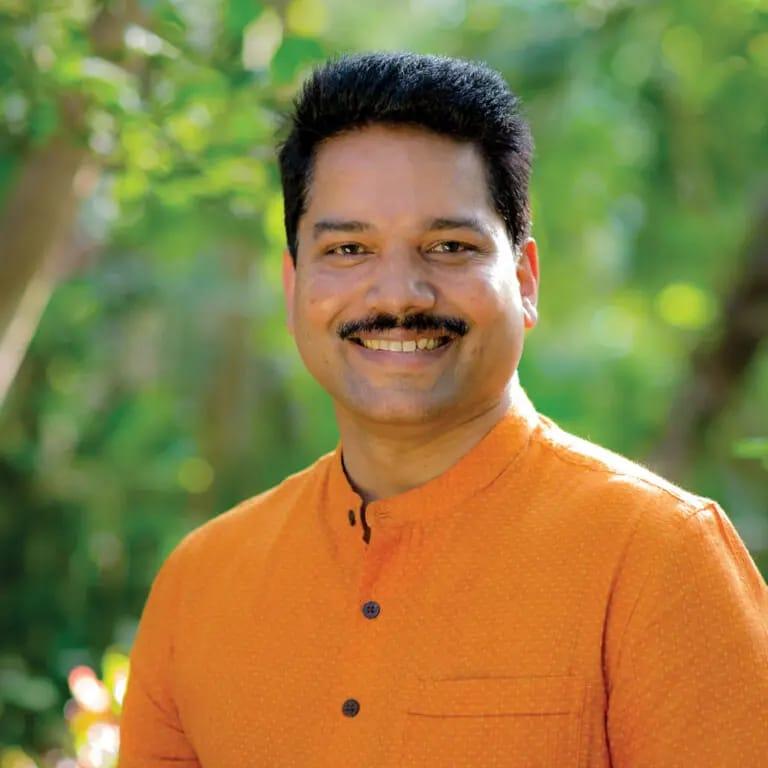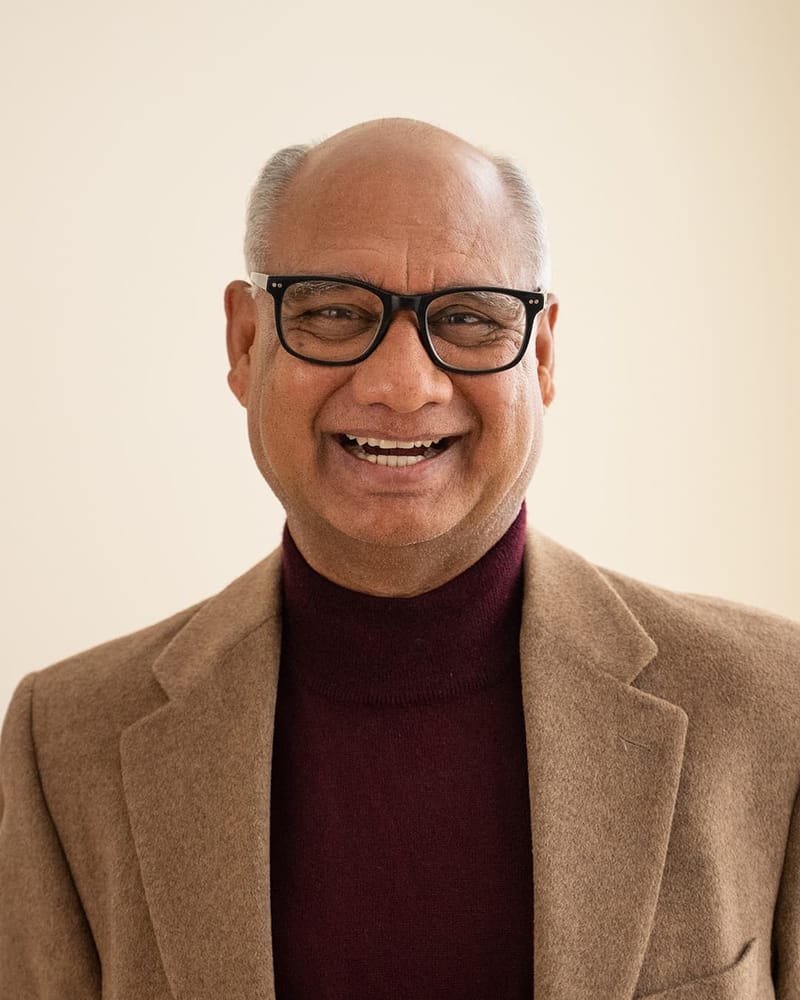
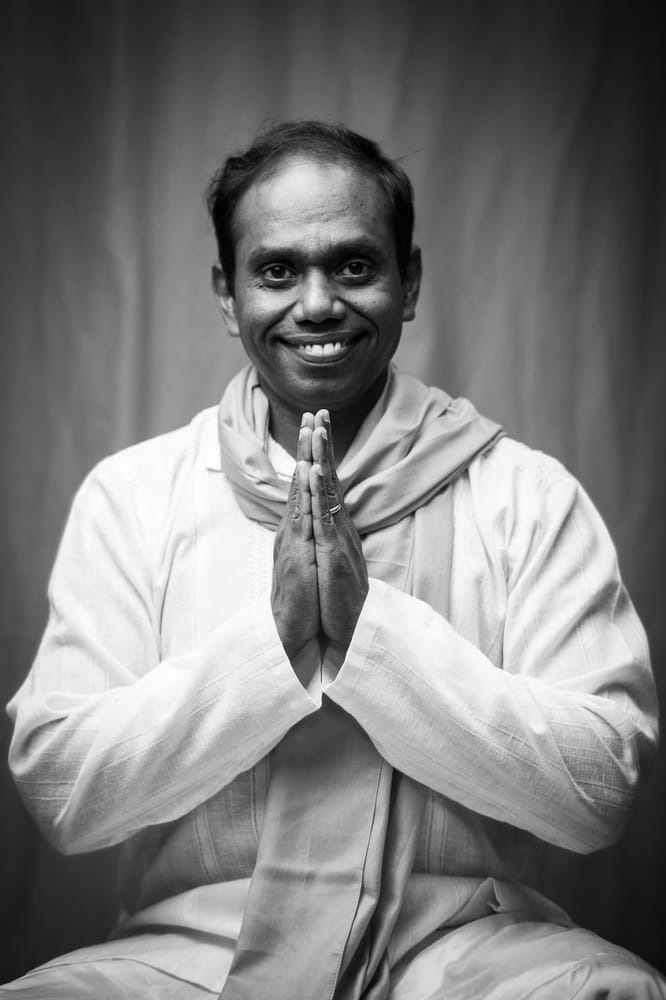
Born in Tamil Nadu India, Dr. Sundar Balasubramanian studied yoga starting at a young age from his father and uncles. Graduating from Gurukula, he majored in chemistry, and yoga, meditation, prayer and group singing also part of the curriculum. In 1999, Dr. Sundar came to Charleston, SC for post-doctoral research. Except for three years working at Yale, Charleston has been home since. His work with other Medical University of South Carolina scientists includes a Yoga adjunct for various diseases. Based on his interest in Tamil literature and Yoga, Dr. Sundar collects ancient scripts. Applying the translation of one of Thirumoolar’s writings to his yoga breathing practice launched the idea for his groundbreaking study of yoga-stimulated salivary biochemicals and how they affect human health. He conducts NIH-funded research on mind-body exercises to learn any social and therapeutic potential for integrative medicine. He has authored four books, several book chapters, and 40 scientific articles.
Classes
Pranayama 5-hour Pre-conference Immersion: philosophy, science, and practice
Date: 23/04/2026
Time: 10:00 am
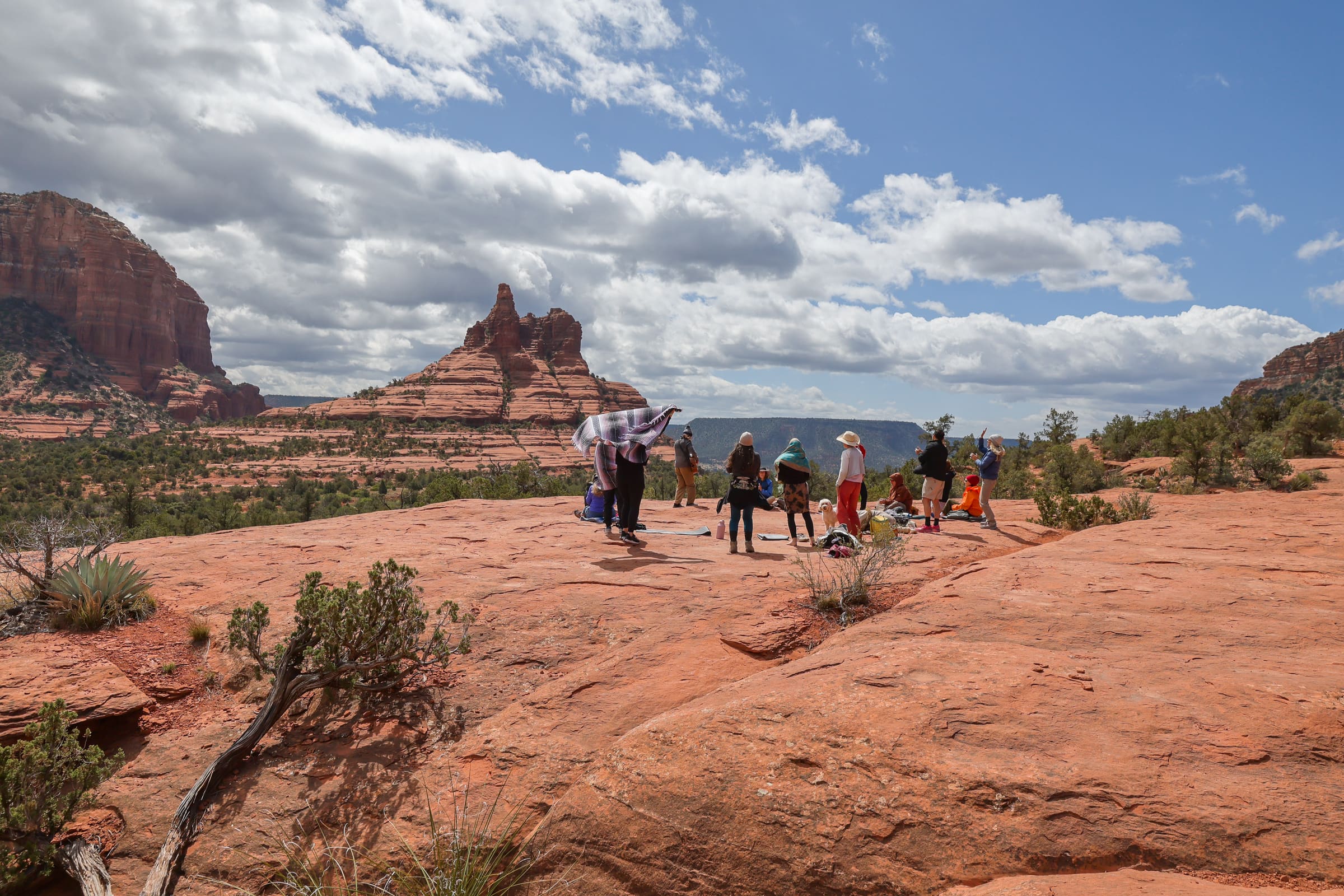
To provide Yoga practitioners with Pranayama's fundamental principles and practice. This Immersion is suitable for Yoga teachers looking to incorporate Pranayama into their teaching & for anyone who would like to deepen their understanding of Pranayama and its healing aspects.This immersion will be on the land in Sedona and include some class time, as well.Who can attend: Open to all levels. Yoga teachers, patients, cancer survivors, students, teachers, healthcare professionals, researchers, social workers, therapists, and anyone who can think of using breathing regulation in their daily life/work can benefit from this immersion.Teaching style: Dr. Sundar Balasubramanian (see Bio) is a traditionally trained Pranayama teacher currently conducting research on Pranayama and its utility in different disease conditions, including cancer, and in health and wellness. This immersion will combine science and traditional practice.
The Immersion will cover the following topics (approximately 35% theory, 55% practice, 10% Q/A).
Introduction Opening Pranayama practicePhilosophy of Pranayama Scientific mechanisms of Pranayama with highlights on benefitsPranayama practices (traditional, modified, and New!)Chanting is Pranayama (connecting traditional mantras with breathing)Easy tips for daily practiceClosing remarksWhat to bring: This is a seated practice session with two 15-minute breaks. We use only half the mat space. No yoga poses will be practiced. Feel free to bring your meditation cushion, blankets, notebook, pen, snack/lunch, water.