Sunday March 29, 2020
Do you ever tell yourself …
My book doesn’t matter. People have written about this before. What could I possible say that would make a difference?
That, my dear, is stinkin’ thinkin’.
Your. Message. Matters.
I was at a marketing training this month and the topic of having a Big Idea for your marketing (and business) came up. Even with my years of helping people to finally write (and publish!) their books, I couldn’t see my Big Idea. It’s like trying to see your own nose – you just can’t unless you use a mirror.
In talking it through we realized that my Big Idea was the one thing I say to ALL of my clients, prospects, people I meet at events, etc.
Your. Message. Matters.
Here’s the thing: you are the only person on the whole planet who is the unique sum of your experiences, feelings, knowledge, and opinions. All that comes together into your own world-view.
Sure you might catalog and classify your opinions through the lenses of your life like:
Or what you think about marriage, guns, equality, feminism, or the importance of bananas in smoothies.
The point I’m trying to make is that you’re so much than just your labels! There are things you care about – passionately, deeply – that you know you are meant to share with the world.
THIS is your message.
It is the information that only you can share. And it matters.
Your message matters to you (of course!) but more importantly, it matters to the people you’re meant to reach.
Will that be everybody? Of course not! But there are people going through life who need to hear what you have to say – and most of them don’t even know you exist.
So when you keep your message to yourself – using whatever hallucination makes you happy today – who are you really hurting?
When you aren’t sharing the message that can:
Then you’re hurting the very person YOU’RE meant to help.
Your message matters to you, it matters to that person, and it matters to me. See, MY message is that I’m a word-person, a story-person, a MESSAGE person. My message is to help you take your message and get it out – to share it, to help it have meaning, to help you touch the lives of others.
YOUR. MESSAGE. MATTERS.
To get started finding yours, register for the session at Sedona Yoga Festival, “Finally Write Your Book: Ditch the Mental Monsters, Uncover Your Message, and FINALLY Write the Life-Changing Book You’re Called to Write”

Your Story Pathfinder, New Frontier Publisher, Bestselling Book Strategist
Best-Selling Author, Kim Eldredge is Your Story Pathfinder, New Frontier Publisher, and Bestselling Book Strategist. She works with message-driven authors to FINALLY write their books so that they can share their message with the world.
Kim is the founder and CEO of New Frontier Books, a comprehensive solution that takes authors from idea to written book to marking an authentic, business-building Amazon best-seller. (No $0.99 Kindle eBooks here!)
She holds a degree in Creative Writing from the University of Arizona and has written 20 books, including an Amazon #4 bestseller, (out of the top 100 books in any genre.)
Kim lives in Northern Arizona with her husband, Ben, and their son. The family enjoys backpacking, hiking, and camping. She’s a true outdoors girl and loves having adventures – the fuel for her creativity and writing!
Find her at www.NewFrontierBooks.com
WeTravel is thrilled to support the Sedona Yoga Festival, a unique opportunity for us to come together as a community in one of the most striking natural environments on earth. Here, shifts in knowledge and perception are amplified by the landscape’s visual beauty and intentional energy; the transformative potential of the experience is similar to what one might expect on retreat. So, if you return home from your weekend in Sedona called to take your practice on the road, check out these four off-the-beaten path retreat destinations. All evoke the Arizona landscape in different ways, yet each offers its own distinct sense of place and local energy.
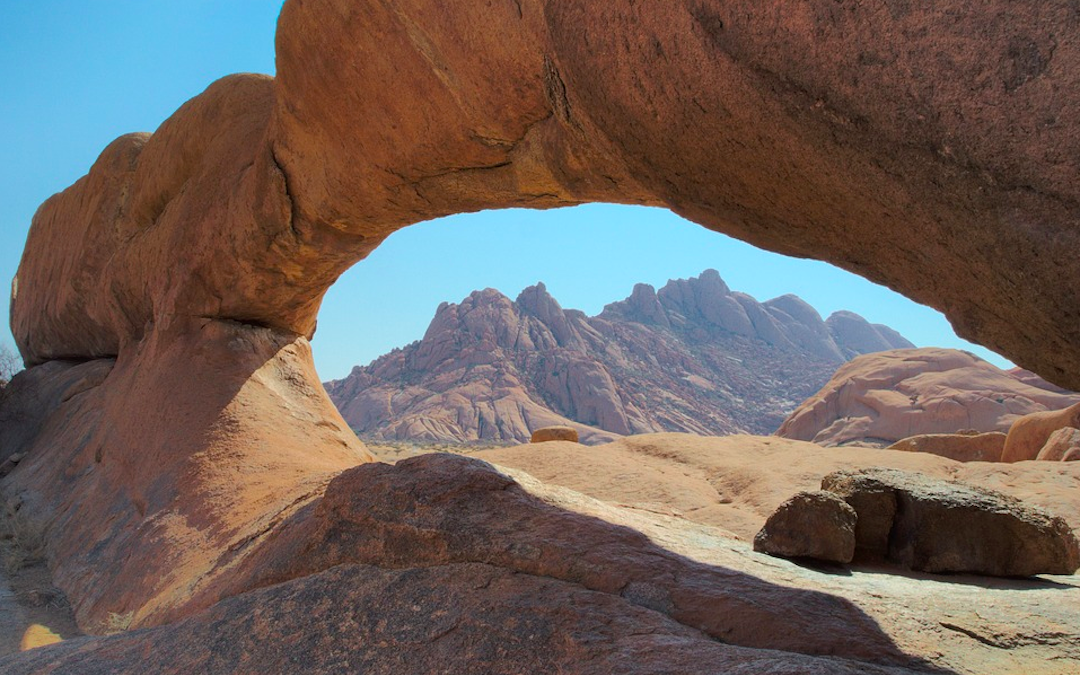
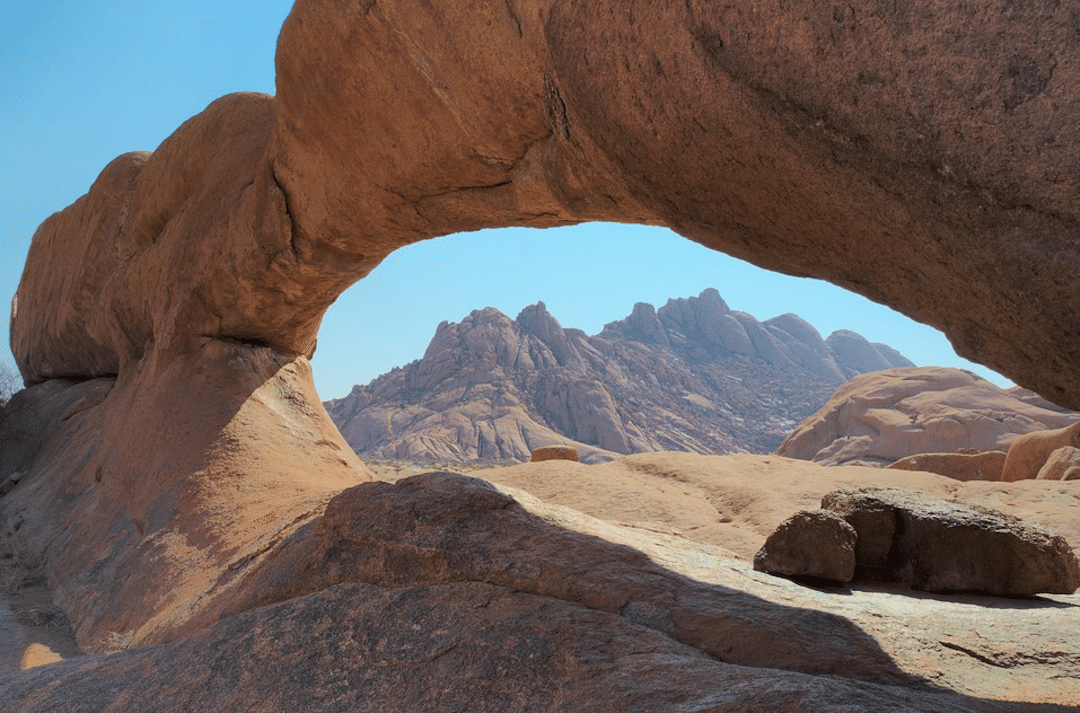
The Spitzkoppe, also known as the “Matterhorn of Namibia” is a group of granite peaks located between the towns of Usakos and Swakopmund in the Namib desert of Namibia. All around the Spitzkoppe, hundreds of bushmen rock paintings can be found. While some have been damaged by vandalism, among those that remain are ancient depictions of rhinos, who roamed the area long ago. For yogis who also enjoy hiking and climbing, Spitzkoppe is an ideal retreat location; terrain can be found to please all levels of mountaineers. And for those that would like to see more of the Namibia’s highlights, Etosha National Park’s wildlife and the Skeleton Coast’s inland shipwrecks are easy side-trips.
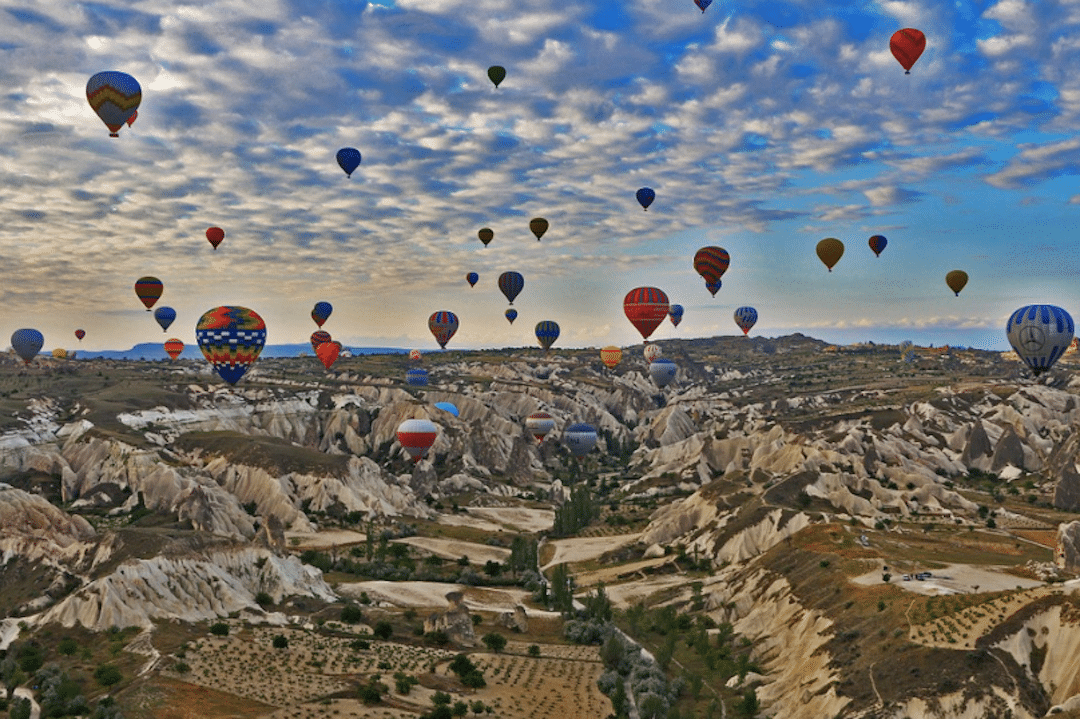
Cappadocia is known for its distinctive “fairy chimneys,” tall, cone-shaped rock formations. These chimneys soar above an extensive network of cave dwellings carved into valley walls; they were originally constructed as Bronze Age homes, and much later used by early Christian populations in hiding. Many small, richly-frescoed cave churches from this period remain intact. Today, many of these cave homes remain inhabited, forming small villages spread across the hilly, arid region. Don’t miss the sight of thousands of hot air balloons surveying the landscape at dawn, or the sound of the call to prayer ringing through the cave architecture five times daily.
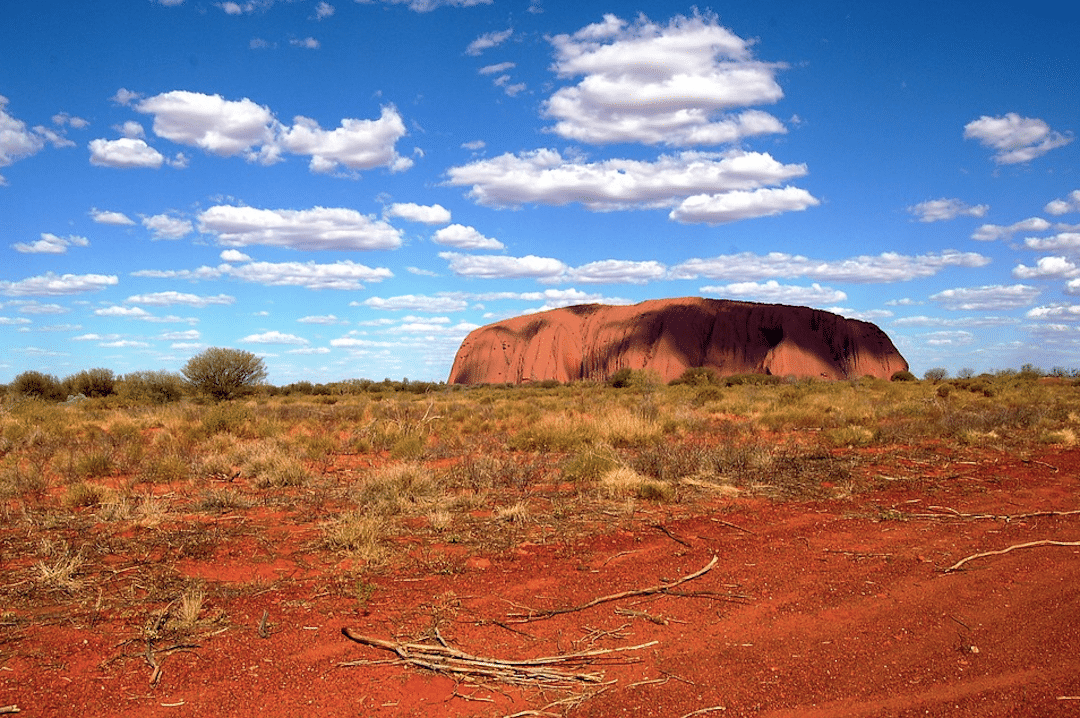
Uluru (also called Ayer’s Rock) is a UNESCO World Heritage Site in the south of Australia’s Northern Territory, approximately 450km from Alice Springs. Uluru is sacred to the Aborigonal Pitjantjatjara Anagu people, and figures prominently in their creation stories and epic tales. The rock outcropping is home to an abundance of springs, waterholes, rock caves, and ancient paintings. While striking at any time of day or year, it appears to change color by the hour and season and glows its reddest at dawn and sunset. Uluru’s remote location makes it an ideal choice for retreat groups looking for an “off-the-grid experience,” yet rising tourism to the area also means increasing choice in terms of accommodation.
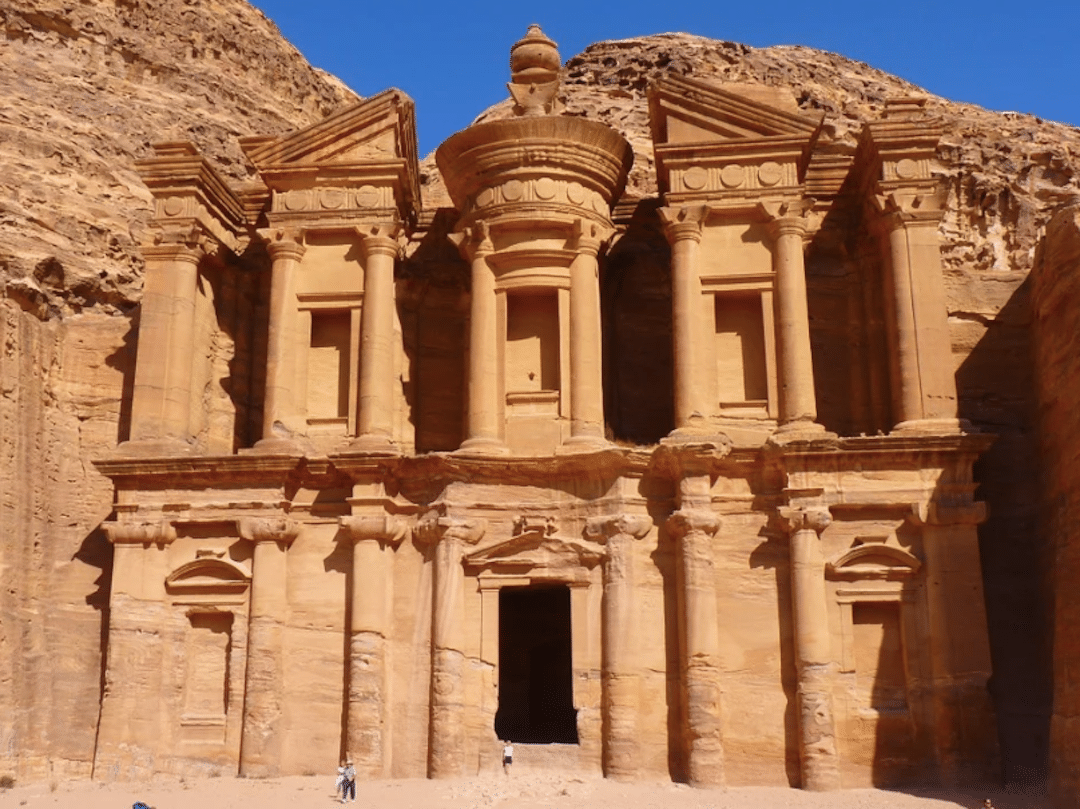
Petra, called the “Rose City,” because of the color of the rock from which it is carved, has been inhabited as far back as the fourth century BCE. Control over the area has passed from the hands of the Nabateans to the Romans, the Byzantines to the Crusaders. Petra was named a Unesco World Heritage site in 1985 and voted one of the “new” seven wonders of the world in 2007. The complex’s striking stone-carved buildings are especially dramatic at night, when they are lit only by thousands of individually-placed candles. Petra is easily accessible from the major city of Aqaba on the Red Sea, which is home to white-sand beaches and excellent diving sites.

Director of Development | Wellness | WeTravel.com
“We’ll be at SYF with information about our payment & registration platform for retreats and training. We work with individuals, studios, teacher training schools, travel companies, and other organizations to help them manage the enrollments, administration, and communications required in connection with these offerings. We’d love to hear about your upcoming retreats and share some resources that could support your efforts. Check out our two-minute intro video at tri.ps/WhatIsWeTravel.”
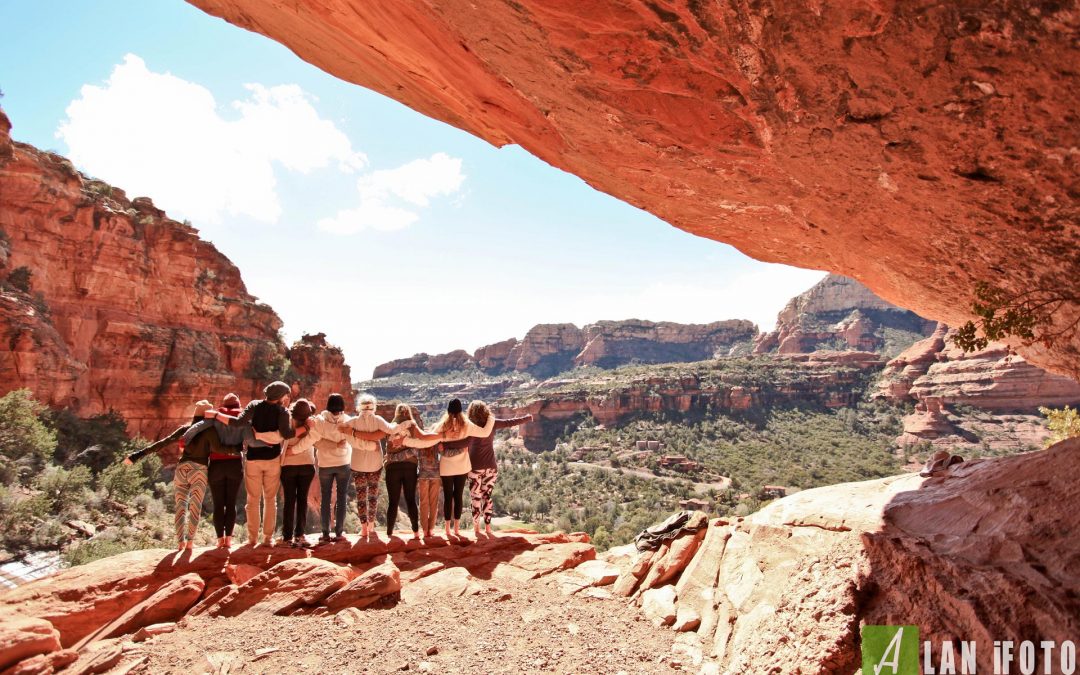
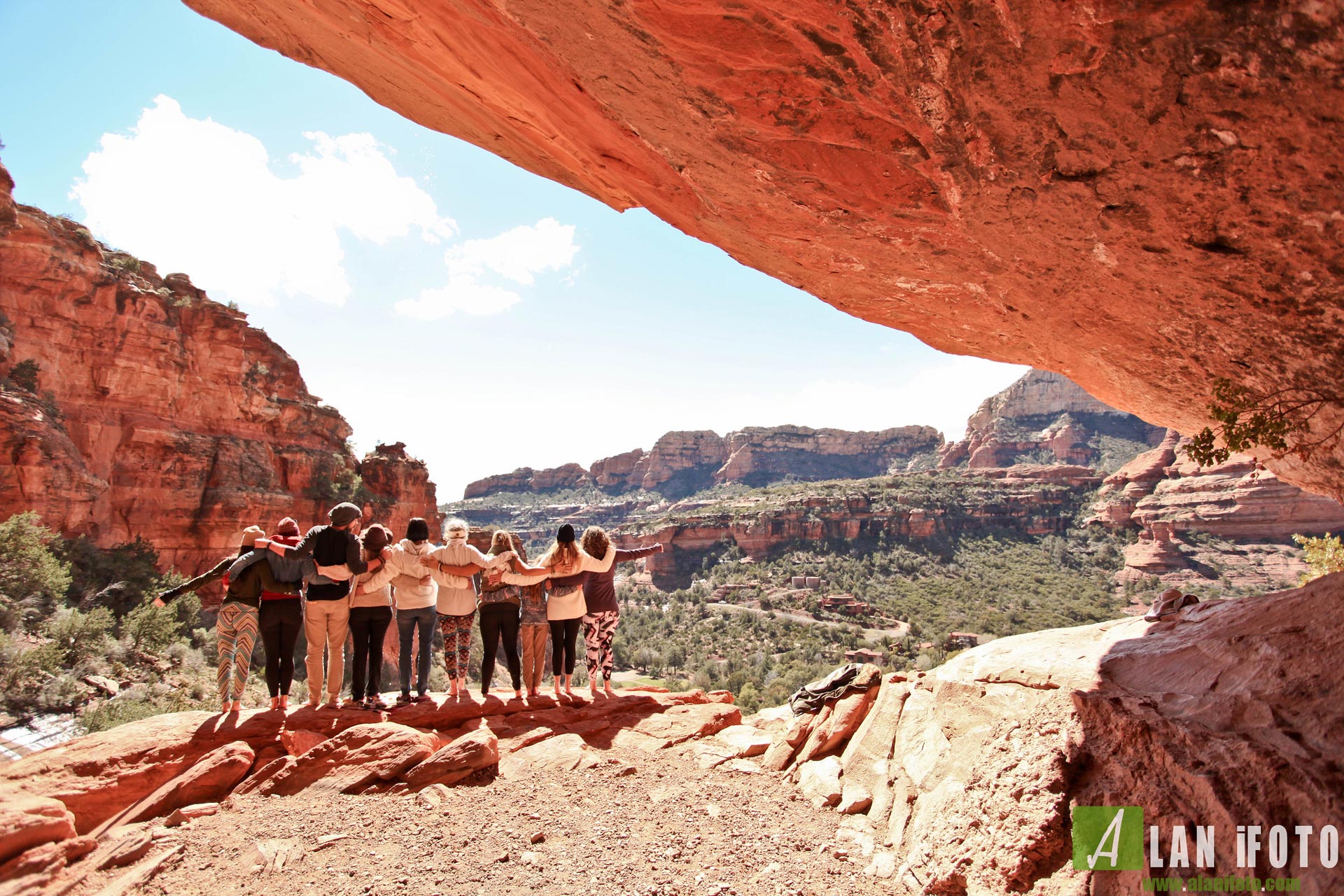
Photo By: Alan Aclid
Human beings, by nature, are social animals. Even the most introverted among us—those of us who prefer a personal practice to a room of sweaty yogis, or curling up with a good book to a glamorous cocktail party—ultimately need some kind of human contact in order to truly thrive. In fact, one study conducted by UCLA found that threats to one’s sense of belonging elicit a physiological response that felt very much like physical pain. In short: isolation hurts.
So, with our eighth annual conference literally right around the corner, your friends at Sedona Yoga Festival wanted to *reiterate* our ever-so-compelling case for practicing alongside a group of aum-azing like-minded beings. Here are four solid reasons to embrace the power of community—and immerse yourself in the high-vibe wonders of this unforgettable weekend.
We definitely don’t dispute the benefits of a regular home yoga practice. Practicing at home is free, it’s convenient—and your dog doesn’t care when you last showered, or whether or not you snore in savasana. But practicing in a group certainly has its merits, too. For starters, studies show that people who exercise in a group enjoy enhanced duration, motivation, conversation and inspiration, as compared to those who do the same activities alone.
And, while it’s true that a solo practice will release endorphins, moving your body in a room full of other bodies gives ALL of you access to the group’s good vibes. Smiles release additional happy juice (bonus!) and practicing in a group has been proven to help get you through any particularly long holds (Yin yogis, we’re looking at you). Beginners can take posture and form cues from more experienced practitioners—and hopefully there’s some juicy dharma, too.
Holding space for survivors of trauma has become a foundational part of Sedona Yoga Festival; if you haven’t read our founder Marc’s story, take a peek here. With each year that our Yoga for PTSD Training flourishes and evolves, we continue to be humbled by the beauty and resilience of the human spirit. But did you know: almost any member of society—trained or not—can be an integral part of the healing process?
One of the most damaging things about trauma is our shattered sense of belonging. The experience removes us from the perceived safety of everything that came before, and places us in a foreign environment; we’re suddenly the sole inhabitant of our own lonely and terrifying planet. “Trauma shatters the construction of the self that is formed and sustained in relation to others,” says Judith Herman, best-selling author of Trauma and Recovery.
This sense of isolation prevents healing, Herman (and her contemporaries) insist. So it’s critical that trauma survivors connect with others with similar experience. Studies suggest that sitting in a group therapy session, even without contributing, can begin to lay the groundwork for addressing the shame and confusion that’s making them feel so alone. In feeling non-judgmental empathy for others, we begin to turn that compassion inward.
For as long as we’ve been on this beautiful planet, humans have been chasing happiness. We’ve attributed it to health, love, money, environment, experience and even our pets. We’ve heard that happiness is a practice…or a choice…or that it’s not even a noble goal. Chances are, the real truth will continue to elude us. But we did find Harvard’s recent research—the longest study of adult life yet to be conducted—verrrry interesting.
The most significant finding of the Harvard Study of Adult Development, which started in 1938, is that solid relationships are the most predictive element of a happy life. The study’s author, psychiatrist and Harvard Medical School professor Robert Waldinger, says, “It turns out that people who are more socially connected to family, to friends, to community are happier—they’re physically healthier and they live longer.”
By contrast, Waldinger found that people who feel isolated experience dramatic health declines and brain function issues in mid-to-later life—ultimately living shorter and less happy lives than those who are grounded in and supported by their communities.
If you read our December post, you already know that giving is good for you. But we thought we’d provide a little more detail about giving back to your community. Studies have shown that regularly volunteering within one’s community can boost your resilience to stress, illness and loneliness—three societal evils that Waldinger’s study warns against.
Another study found that altruism is contagious; those who witness acts of kindness are more likely to perform their own. Still more studies found that regular volunteers enjoy lower blood pressure and reduced chronic pain, along with a higher sense of purpose and…you guessed it…our old friend HAPPINESS! Kind of a win-win-win, if you will.
In summary—where and when should we be waiting with your welcome hug? In these challenging and polarizing times, it’s more critical than ever that we FIND OUR PEOPLE and spend quality time in their company. Here at Sedona Yoga Festival, we’ve spent nearly a decade creating one of the most vibrant, innovative and welcoming yoga communities on the planet. Together, we are building the future of yoga, brick by brick. We invite you to work…and play, and celebrate, and rejoice…alongside us next week. Hope to see you there!
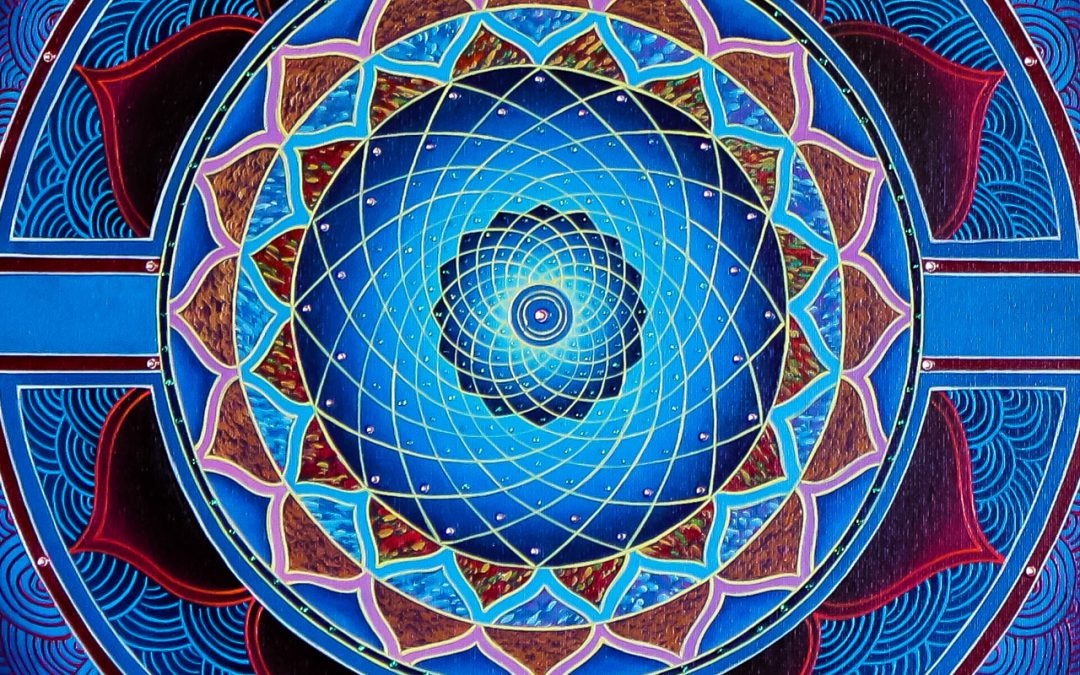
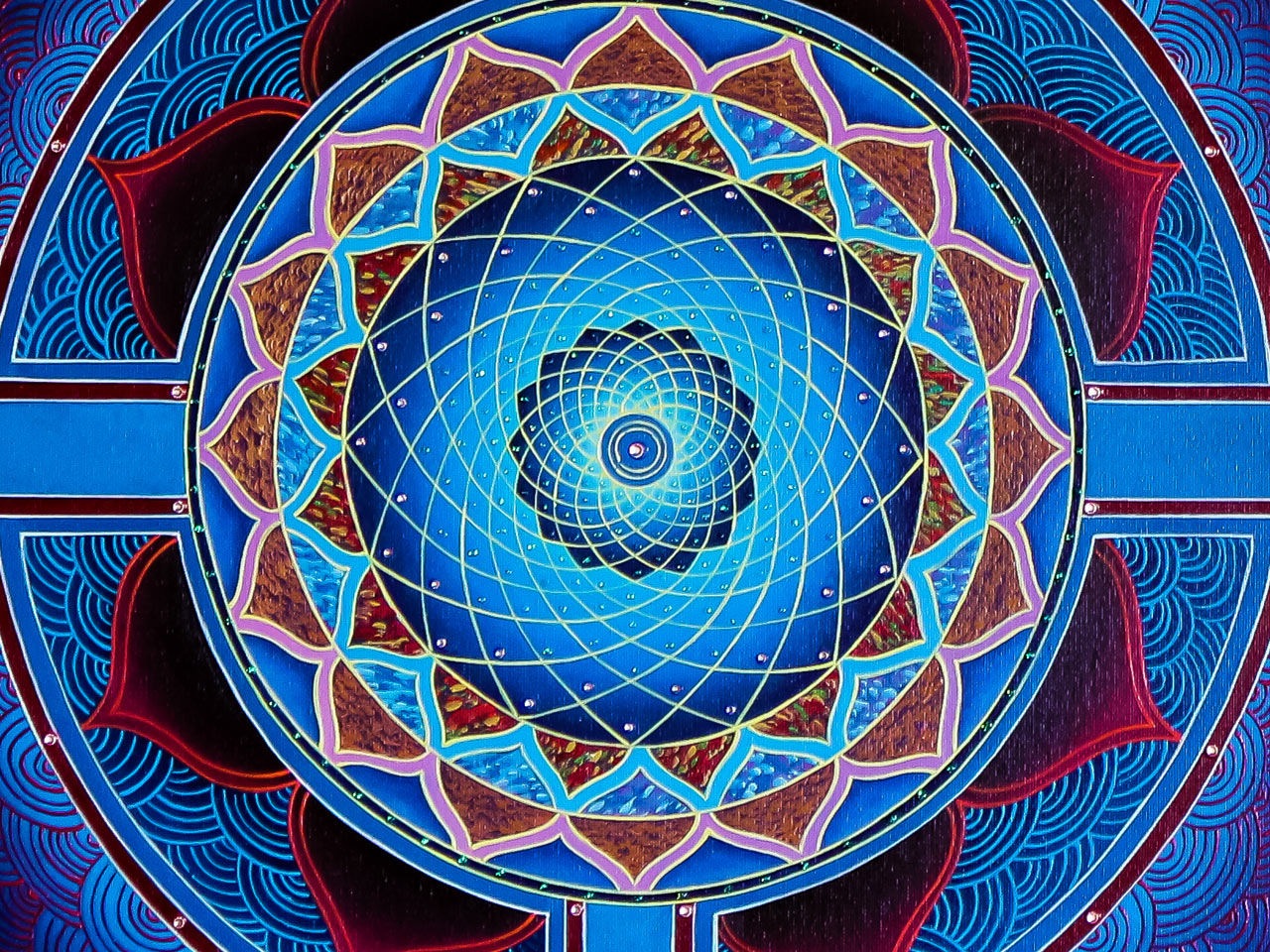
Artwork By: Paul Heussenstamm – Paul will have an exhibit and be teaching a mandala workshop at SYF2020!
Actually, everything you do has the power to change your brain! Scientists (and yogis) have known this for years, but it wasn’t until Dr. Norman Vincent Peale’s tome, The Power of Positive Thinking, hit bookshelves in 1952 that the Western public started pondering the mind-body connection. Just as our muscles can be trained to stretch to a certain point or lift a certain amount of weight, our brains can be trained to follow healthier pathways.
When you practice yoga, you’re combining three critical components: calming thoughts, intentional breath and physical challenge. Without the first two, your body will react with a standard stress response: a sudden flood of cortisol (your body’s fight-or-flight hormone), shortness of breath, mental anxiety and all kinds of other fun stuff. But when you combine all three, you’re training your brain to help your body stay calm in times of stress. It’s a neat trick—and over time, it can help you stay chill as heck in all kinds of stressful situations.
Given the quick overview above, it probably won’t surprise you that retraining your brain to be a reliable feel-good machine will make you…well, feel pretty good. Studies have shown that yoga can help reduce anxiety and depression—and in some cases, regular practice was just as effective a treatment for these conditions as cognitive behavioral therapy.
Some researchers believe this is due to yoga’s ability to dramatically increase production of GABA, a brain chemical with a cellular signature very similar to that of classic anti-anxiety medications like Xanax and Valium. The feeling of a little GABA boost is exactly what alcohol mimics, too—an instant dip in anxiety, accompanied by warm relaxation. Now for the really good news: in one study, subjects enjoyed a 27% GABA increase after just one hour of yoga.
You don’t have to be a neuroscientist to make a connection between improved stress response, reduced anxiety and more feel-good chemicals with greater well being. Because like yoga, happiness is a practice—and the more you do it, the easier it becomes. Case in point: in one well-known meditation study from the 1990s, researchers tracked the brain waves of both novice meditators and practiced Buddhist monks during an extended meditation on generalized compassion.
While both groups, even the novices, showed a marked increase in gamma signals—the brain waves associated with perception, connection and higher consciousness—in the monks’ brains, gamma signals kept firing even when subjects weren’t meditating. The monks’ minds also showed a steady stream of activity in the parts of the brain that connect us to empathy and unconditional love. So yeah…I’ll have what they’re having, please.
Now, if you already have a regular yoga practice, we’re just helping you collect scientific backing for things you already know in your heart. But we’d like you to take a moment to imagine the power of practicing in a group of like-minded seekers, in one of the most spiritually charged landscapes in the world. There’s a collective shift that happens when we come together in service of evolution. That’s not something that happens every day, friends—but it IS something that happens every year, and you should be with us in 2020.
What? You say you don’t have a regular practice, but now you’re feeling like you should? TRUST THAT FEELING. Those are your imaginal cells talking—and they’re waiting to take you anywhere you want to go.