Mar 30, 2022 | Programming Spotlights, Sedona Yoga Festival Teacher Feature
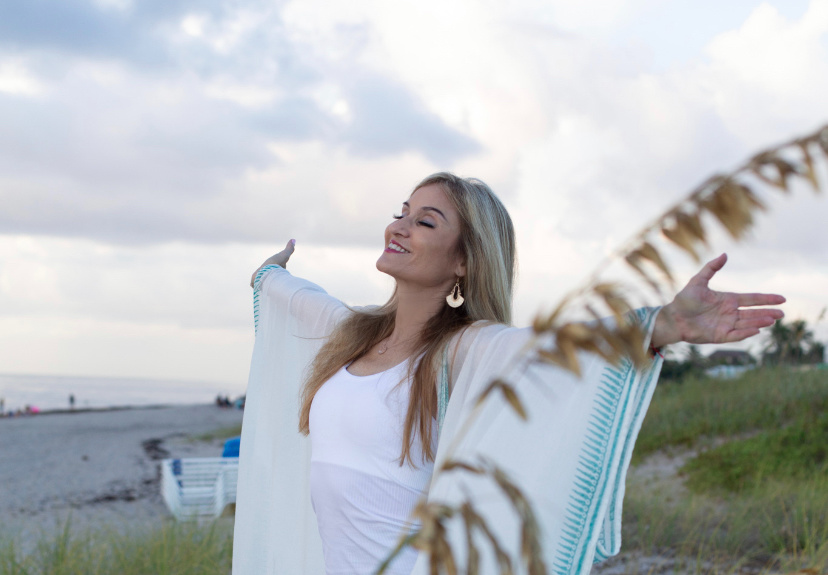
Fern Conn, who opened her yoga studio Dancing Lion in the midst of the Covid-19 pandemic, is no stranger to the struggles and challenges that the past couple of years have wrought. “There’s not a single soul that has not been affected by the goings-on in the world in the past couple of years,” she acknowledges. “We all have this newfound grace to keep that softness, that tenderness in our hearts, so that we don’t go back to the ‘old ways,’” she says. The theme for SYF2022, Give It Up For Grace, is one major reason she was drawn to the event. Heart-centered, soft, and tender is how she teaches — and what she’s excited to share with the SYF community this June.
One of her signature classes, Devotional Flow, is something she’s excited to share, as well as her tongue-in-cheek named Yin & Tonic, in which she combines yin yoga with another healing modality, such as acupuncture or yoga nidra. Though Fern has a dance background, she tends to integrate more than just movement into her classes, encouraging practitioners to consider their reason for being there, rather than just showing up.
“What is your true north?” she asks students. “What has the last couple of years really brought up for you as an important aspect of your wellbeing in life?” That’s how her classes become a meditation on living as well as a practice, making her energetic and emotional-based approach resonate with so many.
Why An Anatomical Approach Isn’t How She Teaches
Trained in dance at The Martha Graham Dance Studio as well as other studios in New York City, Fern has plenty of alignment based experience, and a physical approach is very much in her wheelhouse. “I believe that a lot of the anatomical cues we have used in the past simply do not work for many students,” she says. “I teach to the bodies in front of me. When you force someone into a Warrior I with a heel to arch alignment, it simply does not always make sense. For example, when I have middle aged women from Boca Raton in my class, they simply have a different range of motion than 12 year old boys in India who first practiced yoga. The body needs to be tended to.”
This fluidity is one thing that people can expect to take away from her classes at SYF. She also hopes to impart a “felt experience” for practitioners, she says. “I weave a very rich thematic experience into every class,” she says. She feels the energy of the room, and teaches from that perspective.
She’s quick to note that that doesn’t mean that she thinks everyone will walk away from her classes happier — she’s not into the kind of spiritual bypassing that doesn’t allow for true emotional processing through practice.
“Lately, I’ve felt a great heaviness stirring in people,” she says. “Sometimes we get deep; we’re moving energy, the debris that sits in our connective tissue, and we’re stirring that up. I think to just be able to hold space for that is the ultimate goal,” she says.
A Warm Feeling
That’s not to say that Fern doesn’t want people to feel good when they leave her class, she says. Her goal is to at least leave people feeling better than when they came — and it’s safe to say that SYF attendees will receive that type of nourishment. “I treat my studio like an extension of my home,” she says. “That’s the energy that I hope to bring to SYF. I love the fact that people are gathering again, especially practicing yoga and meditation. We just need more light.”
Experience that light and warmth with Fern this June! Tickets are on sale now! Get yours here — bit.ly/SYF22Tix
Mar 28, 2022 | Programming Spotlights, Sedona Yoga Festival Teacher Feature
The Yoga for PTSD Training has long been a signature offering of Sedona Yoga Festival. It’s just one of the many ways that SYF walks the walk — by recognizing that yoga is so much more than asana, and requires instructors to not only commit to furthering their education, but to consider ways to make their classes welcoming and accessible to all people.
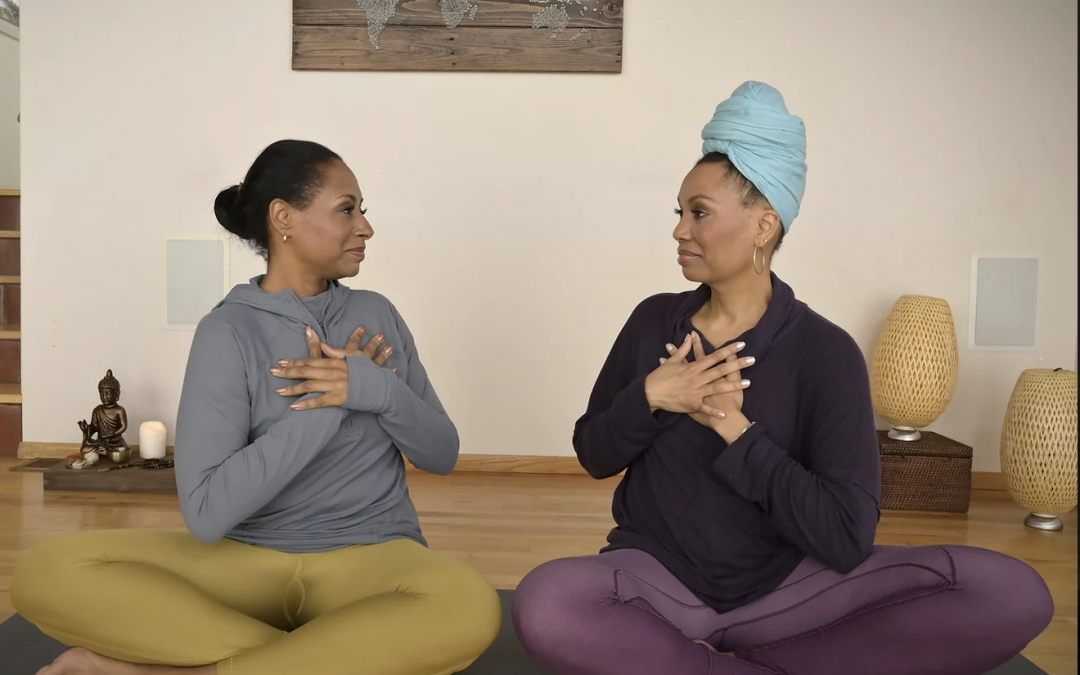
This year, we couldn’t be more excited that the training will be led by the founders of Retreat to Spirit, Amina Naru and Pamela Stokes Eggleston, joined by instructor Kwasi Boaitey. We’ll be examining trauma-informed instruction through the lens of not just PTSD, but social trauma as well, and exploring how to truly make a yoga class welcoming for all practitioners, regardless of race or background. We’ll also address the importance of creating a space that truly embodies the teachings of yoga, and how they pertain to issues in our greater world — how we can address the traumas of the world, and still create a refuge in our practice.
We sat down (digitally) with Amina and Pamela to discuss.
* * *
Sedona Yoga Festival (SYF): How did you get started doing trauma-informed work, and what can we expect from the training in June?
Amina Naru (AN): Pam and I are the former co-executive directors of the Yoga Service Council. Pamela was working with veterans and caregivers, and I had my own business working with incarcerated youth and adults. Through the Yoga Service Council we created a Best Practices series with Omega, a series of books that outlined yoga for people who were incarcerated, people recovering from drug addictions, and for schools.
While working with the YSC we petitioned YA to make it a mandatory part of 200-hrs, or perhaps 220hrs. We are currently actively working to make trauma-informed training a staple in 200hr teacher training. Because everyone has experienced some sort of trauma. And people who have aren’t just showing up in prisons or community centers or the VA — we’re showing up in the yoga studio and in “mainstream” yoga.
Pamela Stokes Eggleston (PE): There are plenty of microaggressions happening within yoga spaces, and it’s causing more harm than good. It’s multi-layered. Yoga teachers are stepping into their classes with an intention to serve or help, but often first-time students walk away from a class thinking “it’s not for me,” or didn’t have a good experience — and it’s due to a lack of training for new teachers.
Really teaching asks you to teach to who shows up in the room, and to really see that person. It also requires basic self inquiry and self reflection. We always talk about the yamas and niyamas, but to integrate them may take someone really examining the way they’ve done things. We know that yoga is an embodied practice — a mind, body, spirit practice. We know that people are getting the bare minimum in a 200-hour YTT, and often a 500-hour YTT. But how can we transmute what has been looked out, to not stay on the surface level of spiritual bypassing that “we are all one”? We can’t ignore the fact that George Floyd got murdered or that there are people in the Ukraine and Russia who don’t want this war. We need to speak to what’s happened. There was trauma as a result of Covid, for example — we need to be able to serve people in these difficult times. That’s the kind of information we’re plugging in, adjusting our training to reflect.
The terms “trauma” and “trauma-informed” are always going to be evolving, because there’s always going to be trauma. It’s really about how we look at it, how we go through it — it’s how the yoga teaches us to ride the waves. The reason I believe that we are here and why we’re at a precipice is because we’ve danced around trauma. We’ve been so individualistic, particularly in Western societies, that we don’t see ourselves in others. This is a different level of work. You have to be willing to change and shift your practice. This goes beyond the studio. This is an inside job.
SYF: What about people who think that politics don’t belong in practice? That yoga is an escape?
AN: There’s a negative connotation around what politics is, what a politician is. But if you really look at it, politics are just life happenings. Life happenings are war. Life happenings are Black people getting murdered by cops — life happenings are Black Lives Matter. People come to yoga to escape — and that’s when the bypassing happens. The new reality and the new paradigm and the new ways of thinking — we have to step into that as yoga teachers, yoga therapists, as whatever the work we’re doing in this healing space. If we are not willing to do that work, and this would be my kind of mantra, one of many, to anybody that signs up for this program: You have to be willing to step into that full on and go through it.
Don’t miss this incredible opportunity to learn from these luminaries. You may purchase a single ticket to the Trauma-Informed Training, or as an an add-on to your All-Access Pass. Learn more about ticketing options here.
Mar 16, 2022 | Programming Spotlights, Yoga Interviews
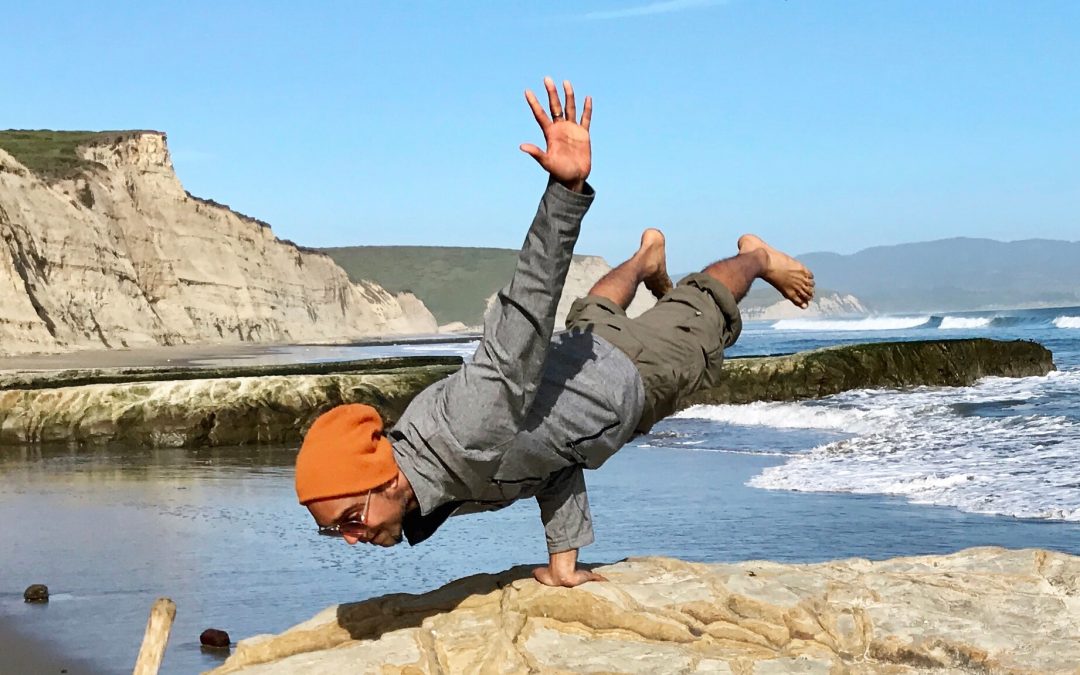
Hawah Kasat: Finding Yoga Everywhere
Yoga is all around us — in art, in poetry, in colorful food, in the small moments of magic that make life full of beauty and wonder. For Hawah Kasat, who weaves art and sacred activism and a plethora of healing modalities into his teaching around the world, it’s all about the transformational experience that the container of a yoga practice can provide.
“It’s important to see the mind-body connection,” he says, “because I think our world is spinning out of balance. Our social, economic, and political systems are driven by the head — they require us to move fast.” This is antithetical to the spiritual human experience. Yoga, says Hawah, allows us to connect to the heart; to take time and consider other people before ourselves. It requires patience with our movements, which translates into our lives.
Hawah says that the blending of modalities and the infusion of art and sacred activism to his teaching fosters an opportunity to bring true peace and understanding to the world. “For me, the reason it’s important to connect social justice with mindfulness,” he says for example, “is because it allows us to become whole again. To see past the illusion of separation. It allows us to realize that there’s great opportunity in creativity to bring peace to the world — by realizing that we’re not as different as we think we are.”
To say — some people may discover the universal understanding of yoga through the lens of a “ninja training ground” or poetry (both of which are offerings that Hawah plans to bring to SYF this June), while others may resonate with a more traditional asana practice. However it resonates with someone, Hawah says, it leads to the place of knowing that “our healing journey is one that we do together. It’s not one that we do in a bubble, you know?”
Bringing the Practice Back to Communities
This is all fine and well, of course, for people who are able to experience a transformative weekend at a yoga festival. What about people who for one reason or another are unable to share in that experience? “It’s important to remember that without taking time for ourselves,” says Hawah, “we are not able to actually show up and support others. There is a really deep need to work on our own individual healing, because that’s the only way we can show up to support and heal others.”
He says that spaces like SYF are integral not only for teachers and aspiring teachers for this reason, but for anyone who is just needing to find joy in their life, and to realize that they are not alone. “It can be tough to wake up these days,” he says, “when you see what’s on the news and what’s happening in our communities, and with the isolation of the pandemic. It’s when we’re together and we’re breathing together and we’re laughing together and meditating together — these are the moments that remind us what’s important. And these are the moments that give us the fortitude to go back into our communities and be inspired,” he says.
How Grace Plays a Role
This is part of what grace is for Hawah — but he says that there’s also an element of kindness, generosity, and forgiveness when we discuss the idea of grace. When we operate from a place of grace we are allowing ourselves to go with the flow, resisting the temptation to force something. When we live with grace, he says, “there’s something beautiful beyond our wildest imagination and dreams. In the mystical sense, grace is about opening up to — and being okay with — the unknown. In the ultimate sense, grace requires a deep trust in the world and in the universe.”
Hawah will be sharing spoken word at the opening ceremony for SYF, as well as several other unique offerings. Join him and other luminaries this June 2–5 at stunning Posse Grounds Park. Tickets on sale now!
Mar 14, 2022 | Sedona Yoga, Sedona Yoga Festival Teacher Feature, Yoga Interviews
Desiree Rumbaugh — Moving Through the Ages with Yoga
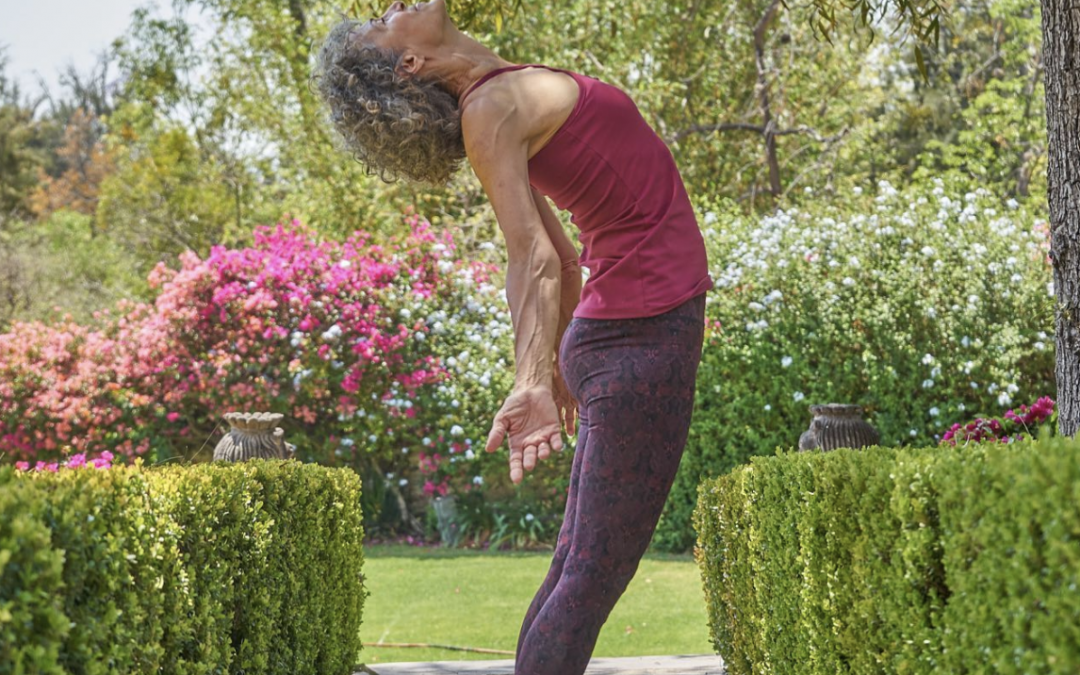
When we tend to think of yoga that’s accessible for all ages and for aging bodies, we trend toward restorative and gentle yoga, as if our aging bodies across the board lose the will for a physical challenge. It doesn’t have to be that way, according to international teacher, author, and PBS contributor Desiree Rumbaugh. “When I was younger, I’d always hear older people saying, ‘I used to do this or that,’” she says. As a very athletic and disciplined practitioner, this wasn’t how Desiree envisioned her own practice changing through the years. She figured that there had to be a way to continue to age well, without giving up the difficult physical practice.
As she herself crossed the threshold of 50 and beyond, that’s what her teaching began to showcase. “How do we keep the party going? How do we keep the fun going? How do we keep our wrists and our back and our knees and our neck able to withstand these poses without injury? So that’s what my teaching is like,” she says, “answering those questions and giving people a lot of ideas.”
Creating a Community
Desiree isn’t alone in this pursuit. She has what she calls a pit crew of physical therapists, weight trainers, and different people to advise her and keep her — and her students — safe as she explores what it means to embrace physicality for older bodies. As the Western yoga world continues to move toward accessibility, Desiree says that she inhabits an important space. “I think that’s kind of interesting to go learn from the lady who’s 63,” she says, “the lady who has been doing this for 35 years, and does everything like handstands and backbends.”
It’s not only an inspiration because of her age, but because of what that kind of flexibility — both physical and of the boundaries we consider in our own minds about the physical — represents. “It’s not because I’m lucky,” says Desiree. “I’ve had to work to change habits and figure out why these pains were there. I’ve had a lot of ups and downs just like everybody,” she says. “How have I gone into it instead of around it or avoiding it?”
This doesn’t mean just haphazardly experimenting with advanced poses. In her thirties, Desiree recalls just being able to go the park, for example, and kicking up into a handstand. This isn’t a possibility at 63, when the stakes are much higher if she falls. This “makes me more aware and conscious,” she says, “so there’s the mind aspect. I think as we age, we need to have stimulation of new thoughts and new ideas and new experiences.” That’s what Desiree’s teaching is really all about.
What Students Can Expect in Her Class
Desiree recognizes that her approach may not be for everybody — but she’s not trying to be. She wants her students to explore their own boundaries, and learn something about themselves that they may not have thought was possible. Her classes inspire students to understand that hard work and dedication results in progress; that you have the power to change your body and your mindset for the better. She also wants to “stress the fun of playing in a yoga class with your friends, even though it can be solitary practice. That’s a big one for me,” she says, “the joy of connecting with others in a playful way where we encourage each other and the support of the community.”
That’s what being at SYF is all about for Desiree — that connection of being with others of likemind, “supported by the breathing and the chanting and the working together mindfully in the present moment.” It’s why we’re so excited to be back together after two years apart, and why we hope you’ll join us in June.
Tickets are on sale now! Come experience the transformation of SYF with us. We can’t wait to see you soon.
Mar 1, 2022 | Sedona Yoga, Sedona Yoga Festival Teacher Feature
Oneika Mays: Why Diversity of Ideas is Important at Yoga Festivals
Oneika Mays doesn’t consider herself a big “festival person,” and typically shies away from appearing at large scale yoga events. The New York-based Riker’s Island meditation teacher said that she’s most excited about the space that SYF is creating for the tough conversations. Among other things, finding common ground with people with whom she may not necessarily agree is paramount to Oneika’s teaching mission.
“I think the work needs to get a little messy,” she says. “And that’s what I’m hoping to bring to Sedona. I want to create a container of compassion and lovingkindness and metta — which I’m really passionate about — being able to move and talk and breathe and listen,” even when we may not agree with each other.
In the wake of Covid, civil unrest, political upheaval, conspiracy theories, and war, it’s never been a more apt time for the world to hear Oneika’s message. When we live solely on one end of the spectrum or the other, she says, “I feel like it’s damaging. The noise starts to sound the same.” She uses the hot topic of vaccination as an example. While she considers herself a staunch proponent of them, “I’m not going to cancel somebody who doesn’t believe in vaccinations,” she says. “What would that say about me?” Her work at Riker’s is the same way — she often interacts with people with whom she does not agree. “It’s all about finding places of compassion,” she says. “Walking the walk is really hard.”
Why the Experience of SYF Matters
In order to begin to bring about the collective healing for which we’re all searching — regardless of belief system of political stance — we have to start somewhere. “I think it starts with giving grace to ourselves individually,” says Oneika. That doesn’t mean that we don’t evolve, and it isn’t an excuse for the kind of spiritual bypassing that results in entirely individualistic evolution.
“The grace comes in when we understand that we all start somewhere; that our views and beliefs can change,” says Oneika. This means listening to new voices and perspectives — really listening — and then allowing for those perspectives to take root in a meaningful way. When the transformation happens within, you are able to start giving grace to others as well.
“I think that’s what yoga is all about,” says Oneika, “having these internal conversations with the noise that’s inside your head and finding ways to understand it, or even just ask questions about it, and to do that with compassion. That’s what I’m hoping people do when they’re in community with me.”
Why It’s Important to Hear New Voices
One of the main programming goals of SYF this year is to bring some new voices to the festival circuit, like Oneika. She said that this is crucial because when we don’t see other people who have come from other places and have had other types of experiences than our own, we really can’t begin to understand the concept of oneness. “The idea of oneness is easy to say when everybody that you’re standing in a circle with looks exactly like you and has the same experiences as you,” says Oneika.
This isn’t a starry-eyed or overly-optimistic perspective. “This isn’t about gathering a bunch of different voices and everybody holding hands and singing kumbaya and sort of going off into the sunset, because that’s not realistic,” laughs Oneika. “Life is uncomfortable, and we can learn to move through discomfort in these kinds of small doses, a little bit at a time.”
In doing this, Oneika believes that we really can work together to create a more compassionate, empathetic, and understanding society. It’s when we truly look through the lenses of truth and honor that we can live our yoga — no matter what your personal beliefs are. This is what grace truly looks like.
Join Oneika for the tough conversations, and create the space in your life for transformation by joining us this June! Tickets on sale now.