Apr 20, 2022 | Yoga Festival Experience
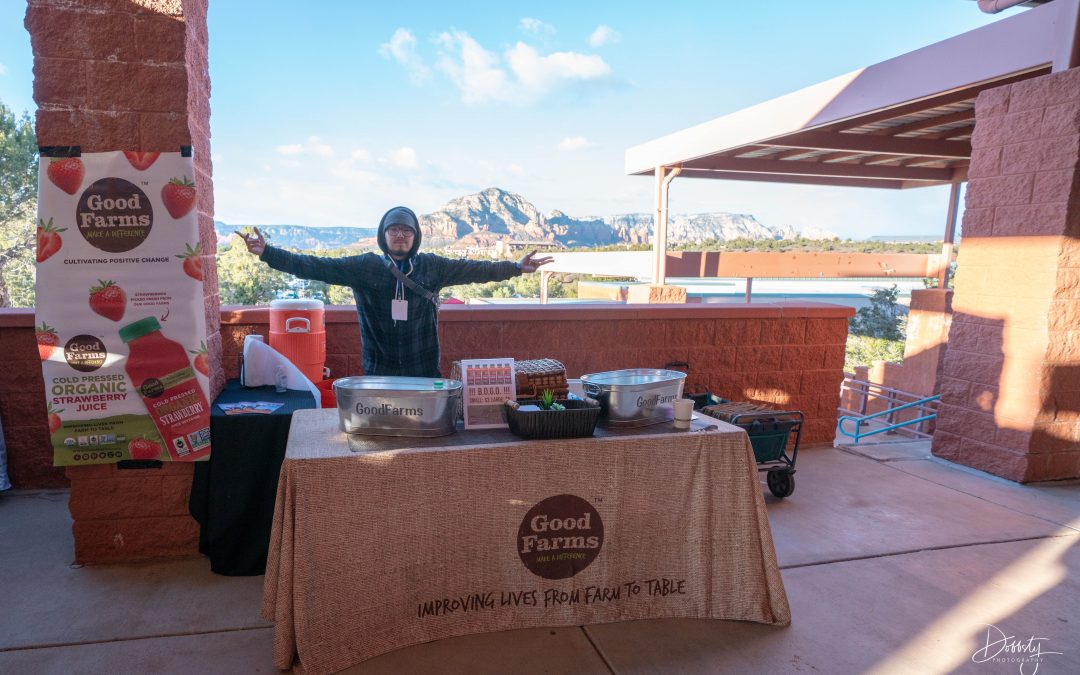
The Conscious Expo is a signature SYF feature that showcases some of the best local and national mindful businesses, offering attendees an opportunity to shop small right from the comfort of the festival.
According to Deborah Williams, local teacher and longtime SYF work exchange Angel and attendee, the Conscious Expo is one thing that really sets SYF apart. Unlike other large yoga festivals that tend to focus on international sponsors and larger chains, at the SYF Expo, “there’s a lot of local people, so you get a taste of the community,” she says. “It’s not just things that are transplanted here for the festival. You can really get a feel for what is rising from the land.”
Local vendors are joined by regional purveyors and national mainstays. Here are just seven of our vendors who we hope you’ll visit at the event. Take a piece of SYF home with you to commemorate this transformational experience. Read on until the end for a surprise treat.
Mandalas: Sacred & Spiritual Art
As a renowned teacher and fourth generation artist, Paul Heussenstamm has been sharing his unique gift of helping people discover their Soul through his paintings and Art As A Spiritual Path workshops worldwide. Paul has created over 2000 unique and spiritual paintings while passionately sharing his artistic capacity to explore and create Sacred Art from many traditions such as buddhism, Hinduism and Christianity. Paul gladly accepts commissions and offers the finest quality Giclee prints on canvas that he creates in his studio.
Pi Yoga Pants
Started by Larissa Miller after a trip to Southeast Asia, the mission of Pi Yoga Pants is to 1) Empower Women and Men of all shapes, sizes, race and religion to feel comfortable and confident on and off their yoga mat; and 2) Save the Sea Turtles! Pi Yoga Pants proudly donates 10% of net profits back to sea turtle conservation.
Mel Rowes Designs
Ethically-sourced handmade gemstone home decor and jewelry made lovingly by Melissa Rowe, based in Temecula, California. Featuring one-of-a-kind rings, skull art, pendants, coasters, sun-catchers, and more.
Yoganastix
Unique, inspiring, eco-innovative fashion that encourages you to wear clothing that reflects an outer-expression of your inner-state. Yoganastix believes that aligning with your values and being conscious of how you show up in the world is empowering. Apparel lines are made with sustainable, eco-friendly, and recycled fabrics, with integrity and love in the USA.
Essential Elixirs
Natural skincare products made with the natural healing properties of essential oils. Each elixir is handmade and in small batches to ensure potency, quality, and positive vibes. Also offers home care products and product bundles.
The Ritual
High-vibrational rituals for healing, self care, and living a spiritually-aligned life. Offering guidance and products for ceremonial rituals to enhance the process of connection to self and the collective consciousness.
Yoga Rocks
Yoga Rocks direct body weight into the pointer fingers and thumbs, allowing us to lighten in the heels of the hands where we almost always put pressure. Made from 100% silicone, Yoga Rocks attach to your yoga mat of choice to activate the muscles of the hands. Active hands encourage active forearms leading to optimal wrist stability and consistent strengthening.
Join us June 2–5 for the summer’s premiere transformational event! Save some money for the Conscious Expo and use code NIFTY50 for $50 your ticket. Enter on Eventbrite to redeem — good only through April 30, 2022.
Apr 14, 2022 | Programming Spotlights, Sedona Yoga Festival Teacher Feature
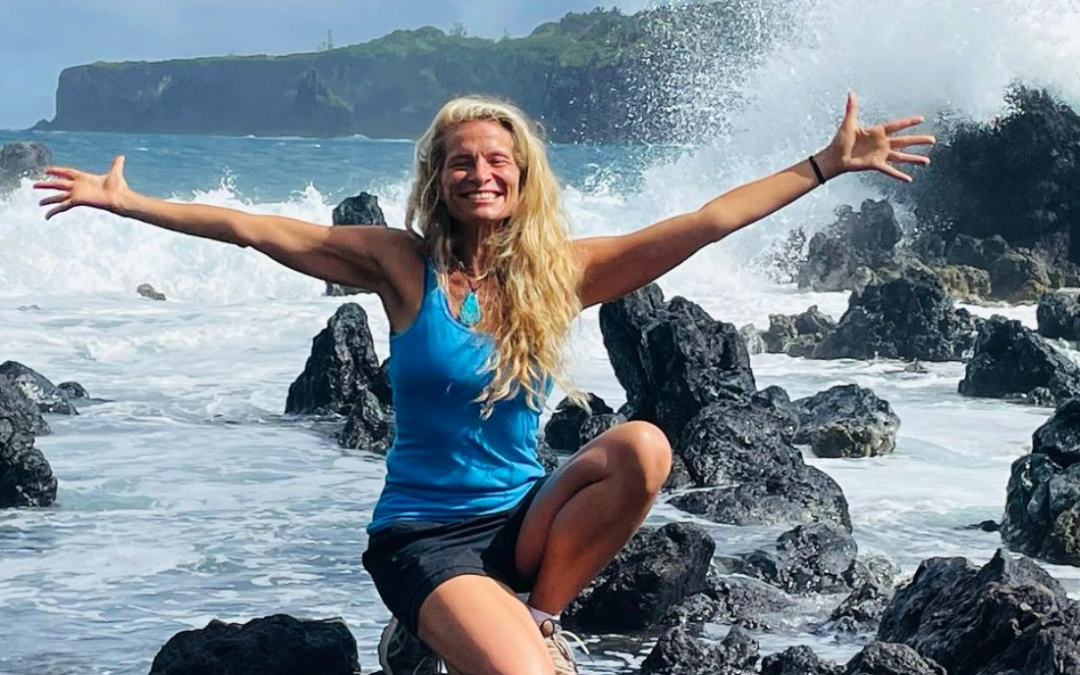
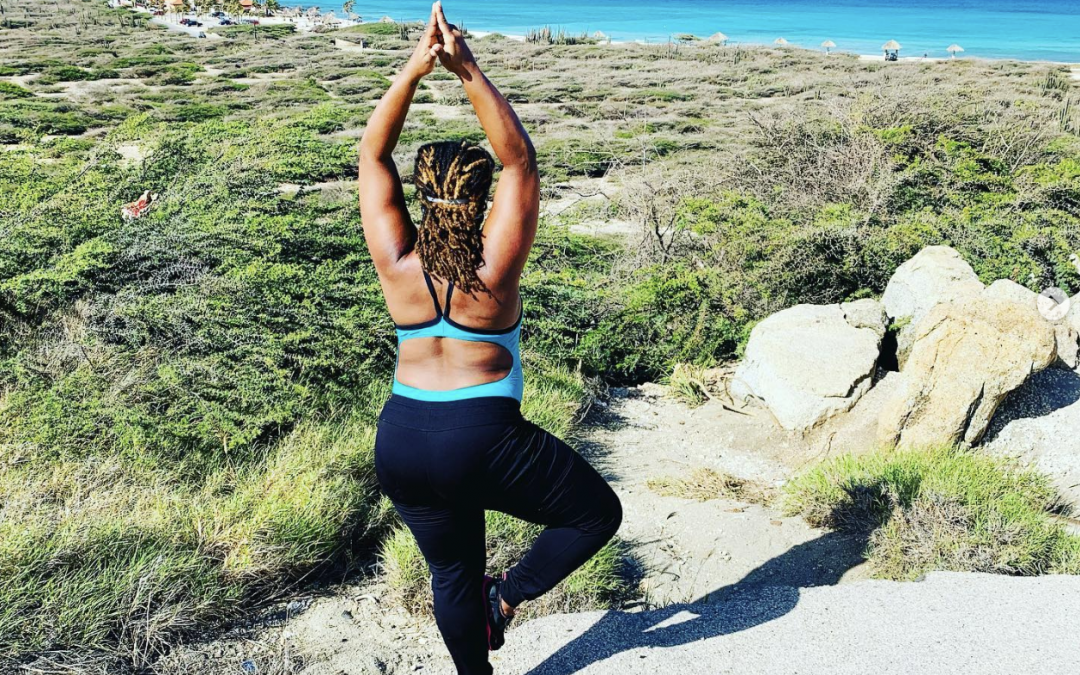
For SYF presenter Janet Farnsworth, it’s all about the physical body. As a somatic therapist and body empowerment coach, Janet believes that facilitating a meaningful connection with our bodies is crucial to creating an empowered relationship with the self. “Your body is the best of you,” she says. “Your body, and how your body holds you at every moment can teach you, and is actually your access to grace.”
In a world in which we’ve been taught so many things about what our body is, what it “should” be, and how we move into it, this can be a difficult concept to impart, or to grasp. “Many of us have very real experiences that separate us from our bodies,” acknowledges Janet. This is true regardless of our experience with trauma, or how much yoga and meditation experience we have. Our so-called “monkey mind” is relentless. Janet specializes in helping people have a consciousness shift that the body is not its appearance, but rather the experience that it gives us.
Janet believes that the body is the voice of the soul — which is at first a confusing thing to hear a yoga instructor say. “I know there’s a lot of subtlety in that,” says Janet, “but I also believe that the divine loves a paradox, right? We are not our bodies, but I’m here to speak for the bodies that we are. What I do is help us figure out how to make being in our bodies the most peaceful, awake experience it can be. I specifically do that with women, and some of the stories that we have about what our bodies are.”
How Being In Our Bodies Creates Presence in Grace
In Janet’s perspective, as our bodies are temporary homes for our infinite souls, they present an opportunity for us to be in divine communication, and a connection to one of the most valuable conduits to grace. “It’s a gateway to bridge the divide,” she says. Though there’s often an eagerness to leave the body behind, developing that conduit can actually be a helpful way to access deeper connection.
As such, SYF attendees can expect to walk away from Janet’s classes with a new relationship to their bodies, or a different way of looking at relationship with their body. But it’s more than that — it’s also to create the ability to, say, stand in front of the refrigerator and not feel afraid; the ability to walk by a mirror and look in it. It’s a shift to appreciate the body that you’re living in, every moment of every day.
And when we do that, says Janet, “then a relationship to our sexuality changes completely. The ideas that I’m specializing in right now involve how we relate to our bodies, and how that relates to our sexuality.”
The SYF Experience
Janet is no stranger to the Sedona Yoga Festival, and is excited to return because she says that SYF “holds an extraordinary container for love and truth.” She calls it a consciousness-raising experience, which is a phenomenon that Janet experiences — and again, helps other people experience — through their physical bodies.
“I think that the body is brilliance,” she says, “I think that the body is the voice of God; it’s our own God. I’m thrilled to share one small thread of what’s possible about connecting to grace and living in grace.”
Experience your body in a whole new light and practice with Janet in person this June! Tickets on sale now: https://bit.ly/SYF22Tix
Apr 12, 2022 | Programming Spotlights, Sedona Yoga Festival Teacher Feature
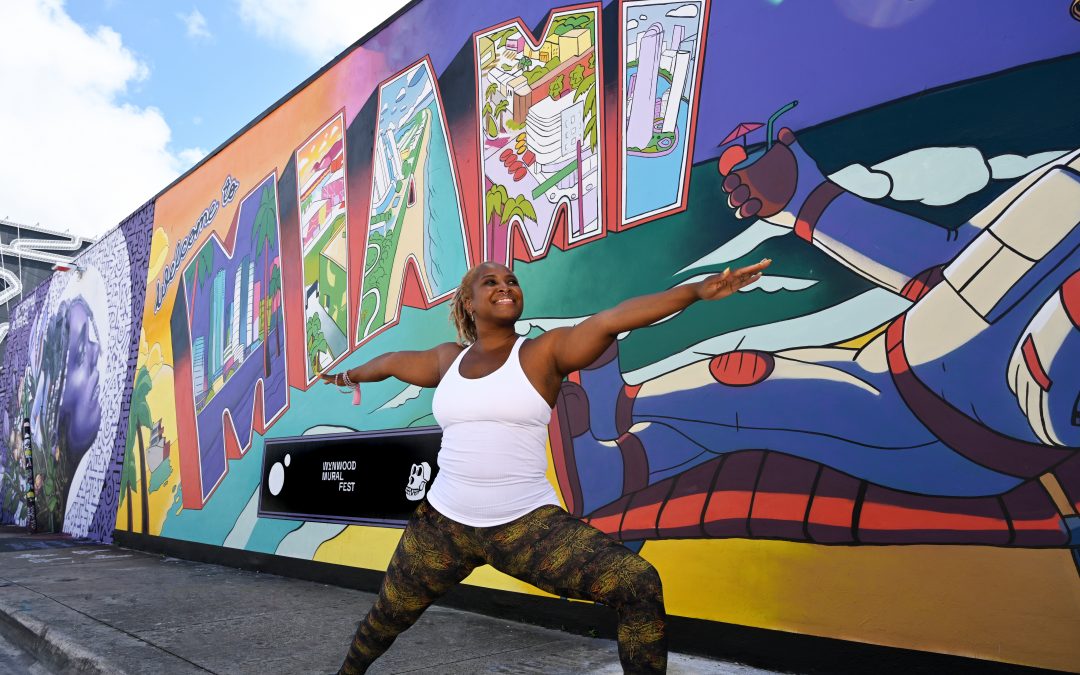
When Dr. Tequilla Hill applied to be a presenter at SYF, it was something that had been on her bucket list. She’s excited to bring a couple of different kinds of experiences to the event: somatic meditation and gentle yoga that’s centered around the practice of self-compassion, followed by journaling. Her style is all about bringing folks back into themselves, creating a sense of home within. As a licensed psychotherapist, she believes that yoga is a practice in reconnection — with ourselves, our bodies, and with what keeps us well. “That’s one of the number one things I see with people who have mental health issues,” she says, “being disconnected with what keeps you well. Who are you, and what does your body need to feel optimized?”
What is Disconnection, and How Do We Get There?
“All of us have many intersections,” says Tequilla, “we play many roles.” This means that we show up in life in several different capacities for different people. Oftentimes, our body itself isn’t a center of those roles, and we neglect to prioritize what we need mentally and physically to fulfill those roles for others. This leads us to feel disconnected from our authentic best selves. We end up performing, rather than showing up in a meaningful, connected way.
“It’s hard to show up for grace and compassion if you are disconnected from yourself,” says Tequilla. “Grace and compassion have to be embodied within the self first.” Practices like journaling and somatic meditation can help us come back into the body, and reconnect with that sense of authenticity.
“There’s something very powerful about writing,” she says, though she understands that not everyone is a journaler. “That’s why I’m doing guided journaling, and giving prompts that are in alignment with the flow so that folks can have a conversation with themselves — a compassionate, graceful conversation with themself about their experience and something to gently hold themselves accountable.”
Inspired Action as a Means to Connection
Accountability is another part of the equation in the doctor’s teaching; she believes that accountability and grace go hand-in-hand. Journaling is a conduit that allows for participants to take away something that is meaningful, that they can tangibly implement in their everyday lives. But it’s important not to allow accountability to get too far into the realm of pressure, she says. According to Tequilla, it’s only with the softness of self-compassion that accountability helps us evolve, grow, and move into something different. “I’m about inspired action, not pressured action,” she says.
Similar to the concept of not only seeking therapy when things are in crisis, “you do not have to start something when it’s perfect,” she says. “The present is magical because it helps us create a future. We can pull our wisdom and our lessons from the past, and transmit that energy into power,” she says. That’s what inspired action is all about. And it’s a practice — it can be easy to be distracted and forget the path. Practice makes mastery, says Tequilla, and showing up as your best and most connected self is no different.
She recognizes that as a teacher facilitating this experience, that practice extends to herself as well as her students. First and foremost, she says, she will show up with grace for herself, without the pressure to perform. This will then extend that level of grace “so that people can have whatever experience they want to have with me, as long as they’re present with me and give themselves the freedom to allow whatever comes up,” she says.
Experience this deep and gentle work with Dr. Tequilla Hill in person this June! Tickets on sale now: https://bit.ly/SYF22Tix
Apr 7, 2022 | Programming Spotlights, Sedona Yoga Festival Teacher Feature
For Shanna Small, yoga instruction isn’t about the physical practice — and can be as much about adapting tradition as needed for all practitioners to find flow. Her journey began with the more traditional Ashtanga lineage, but as she’s changed, so has her practice and her teaching. “I explore the intersection between social justice and yoga,” she says, “and my work these days is mostly in accessibility and the idea of living a yogic life.” Her goal is to offer the breadth of what yoga has to offer, beyond asana. SYF attendees who come to her classes can expect the interweaving of grace into explorations of the Sutras, and how we may dive deeper into our bodies with this integration of the mind.
That’s not to say that Shanna doesn’t teach strong asana classes. One workshop she’ll be offering will be based on asana that were handed down directly to Pattabhi Jois from Krishnamacharya in the way that he was taught, she says. What makes this strong, traditional practice uniquely Shanna’s, however, is the adaptation of this traditional style to be hugely accessible. “I’m going to teach to who shows up,” she says. “I’m going to tailor the class around whoever is present. This will invite people to really feel into their body, and to do the things that work and feel right for them.”
This means giving lots of different modifications, she says, and presenting different ways of looking at the postures. This insistence on adapting very traditional asana so that it may be explored — and enjoyed — by all is what Shanna means when she says that her mission is to integrate the true teachings of social justice and the Sutras into her classes. It’s what makes her teaching style accessible for all.
Adapting Tradition and Why It’s Important
Shanna recognizes that some people may take issue with her approach — that some may not think of Ashtanga as being fluid and adaptable. But she believes that that perception may have more to do with the typically able-bodied and young people who found themselves going to India to practice. When these students brought the teachings back to the West, “it became convenient to do more or less the same thing with everybody,” Shanna says. But there are people who studied directly with Pattabhi Jois, older teachers, “who say that the sequencing was different; that different people were given different things,” she says.
“I honestly feel in my heart that I am teaching according to tradition; that Ashtanga was never meant to be this very regimented dogmatic practice,” she says. “For me, it’s important to me because I believe that everyone should be able to practice yoga, and that when we say that, we need to mean it. And that means that yoga has to fit for where we are in our lives. If we create a very dogmatic rigid practice as people’s bodies and lives start to shift, what I’ve seen is that people start to feel a lot of shame.”
The Grace in Releasing Rigidity
Shanna will also be teaching a workshop around the idea of ishvara pranidhana, the niyama that instructs surrender, letting go, and release. It’s an interesting complement to her Ashtanga offering, which, again, is centered around the grace of letting go of the expectations that typically encapsulate that practice. “Grace is when we get into the flow of the universe,” says Shanna, “though I don’t mean that in a woo-woo way. Grace is really this idea that if we find a way to get in tune with nature and the universe, we’ll start to flow and find some ease in our day-to-day life.”
She says that, ultimately, that’s the purpose of studying the Sutras — to practice discriminative discernment of the eight limbs of yoga. When we are in line with the world around us, we are in line with grace. “Certain trees lose their leaves, others flower at certain times of the year, and others go dormant,” she says. “The universe knows its time and its purpose — it is always waxing and waning. It’s the same thing with our practice and making our practice accessible,” she says — it’s about creating a practice that allows the natural ebb and flow of your life to take you to mat exactly as you are.
Learn from Shanna in person at SYF this June! Tickets on sale now: bit.ly/SYF22Tix
Apr 4, 2022 | Programming Spotlights, Sedona Yoga Festival Teacher Feature
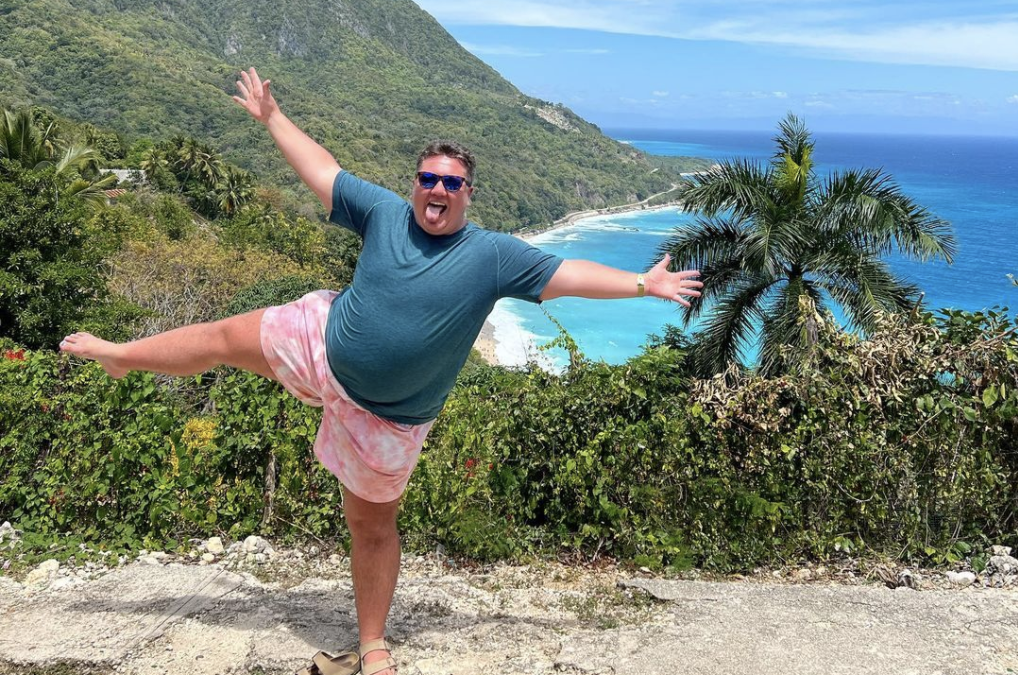
At the very beginning of our conversation, Allé K says that as a trans yoga teacher, he’s over-the-moon to be kicking off Pride Month by teaching at SYF this year. “I’m really excited to bring some in-person pride classes to SYF,” he says. “I also went to most of high school in Arizona, so I’m excited to return home, in a sense. It feels a bit full circle. And the desert is just really magical and healing,” he says.
Allé’s offerings are centered around truly promoting diversity and inclusion in yoga, and he’s passionate about being sure that all bodies feel like they have a place in practice. “Pride is one time a year where we get to really celebrate our trans identities and be out and loud about it,” he says. “It’s a joyful time for trans folks. I’m also a fat yoga instructor, in a larger body,” he says, so his classes typically center fat folks.
When asked what trans and fat affirming classes are all about, Allé says that it’s really about holding space. With his kapha-dominant dosha, Allé acknowledges that space-holding is one of his specialities. “How can we really show up and not try to put our perspectives on others?” he says. His classes encourage all participants — both in the class and beyond — to truly breathe deeply, and consider how to be an embodied person.
For people who identify as queer or trans, Allé says that his presence at the front of the class alone is validating. “Just having a teacher of your shared identity is really important,” he says. But this is equally important for cisgender students as well — being around trans folks is a crucial first step toward cultivating compassion, and living from a place of true yoga. This is what begins to activate a kind of living yoga in a person’s life. As an example, he acknowledges that correct pronoun usage is ahimsa. “Letting go of attachment to the gender binary, to the way you perceive a person’s gender — that’s ishvara pranidhana,” he says. “It’s about humility, understanding, and removing the ego. It’s about acceptance, and that’s the yoga.”
How This Plays Into Grace
Having studied with Dharma Mittra in NYC, Allé has no qualms talking about God, and the idea of God. For him, God is trans, fat, and speaks openly to him. He acknowledges that many trans folks have a difficult time talking about God, but for him it’s all part of the same conversation around ahimsa, which brings the idea of grace into play.
“Yoga means advocating for those on the fringes of society,” he says. “How can we get to the goal of collective liberation — which is the goal of yoga — if we don’t consider yoga a liberatory practice for everyone?” To Allé, this means lifting up BIPOC voices, queer and trans voices, fat voices, South Asian voices, etc. “It’s inherently connected to our liberation as a collective,” he says. When we acknowledge this and work toward it in earnest, we are working and operating in grace, and in God.
How We Can Take These Practices Off the Mat
To practice what Allé preaches off the mat, there are lots of simple ways that you can do so. “Put your pronouns in your Instagram bio, your Zoom name, your website page, and email signature,” he says. “If you don’t have any trans friends yet — or you have one, but you don’t want to bog them down — educate yourself about the community!” This is as simple as watching shows or movies. You can also advocate. If, for example, you live in Arizona, pick up the phone and call your representative, voicing that you don’t want anti-trans laws in effect.
And, says Allé, “pass the mic by literally doing what SYF is doing, by giving me a platform to teach at the festival.” We will all benefit when we work collectively toward this kind of liberation. “We want and need trans folks in this world,” says Allé. “We are a light, we are magical beings and we need us in this world. Trust me, YOU need us in this world.”
Learn from Allé in person this June 2–5 at SYF! Get your ticket today: https://bit.ly/SYF22Tix